 ClimaClue
Mediterranean, warm summer climate (Köppen Csb)
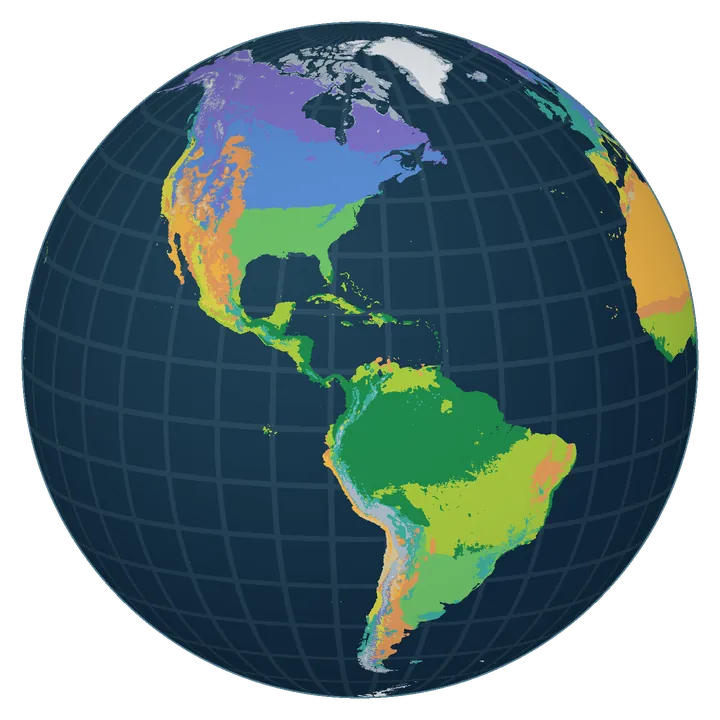
Köppen Csb
Mediterranean, warm summer- 580towns
- 24countries
- 20.0 °Ctypical warmest month
- 9.5 °Ctypical coolest month
Warm, dry summers and mild, wet winters.
- Summer is the dry season
- Summers are warm rather than hot, often cooled by the sea
- Rainy, mild winters
Where the mediterranean, warm summer climate occurs
580 of ClimaClue’s towns have this type, in 24 countries. Across them, the median warmest month averages 20.0 °C (68 °F), the median coolest month 9.5 °C (49 °F), and the median yearly precipitation is 1,061 mm (41.8 in).
Types are calculated from each town’s own modelled 1981–2010 monthly averages, with the Köppen–Geiger rules of Peel et al. (2007).
What typically causes this climate
Textbook mechanisms that typically produce this type; any one place can differ.
- Temperature
- Summers are warm under persistent high pressure; nearby sea often softens winter cold.
- Rain and snow
- In summer the subtropical high pressure moves over and blocks storms, so summers are dry; in winter it retreats and storms from the ocean bring rain.
- Sunshine and cloud
- Summer high pressure brings long sunny spells; winter is cloudier.
- Moisture
- Summers are often dry inland but can be humid with low cloud near cool coasts.
- Wind
- Winter storms bring the stronger winds; summer sea breezes are common near coasts.
Themes: Cities with dry summers · climate rankings
Countries with this climate type
- United States221 towns with this climate
- Portugal100 towns with this climate
- Chile68 towns with this climate
- Spain37 towns with this climate
- Mexico32 towns with this climate
- Tanzania25 towns with this climate
- China18 towns with this climate
- Kenya17 towns with this climate
- South Africa15 towns with this climate
- Canada13 towns with this climate
- Argentina5 towns with this climate
- Australia5 towns with this climate
- Guatemala5 towns with this climate
- Ecuador4 towns with this climate
- Ethiopia3 towns with this climate
- Turkey3 towns with this climate
- Italy2 towns with this climate
- Albania1 town with this climate
- Lebanon1 town with this climate
- Malawi1 town with this climate
- Morocco1 town with this climate
- Mozambique1 town with this climate
- North Macedonia1 town with this climate
- Zambia1 town with this climate
The 120 largest towns with this climate
- Cape TownSouth Africa · 948 mm a year16.2 °C
- San JoseUnited States · 548 mm a year15.6 °C
- Guatemala CityGuatemala · 1,214 mm a year19.3 °C
- San FranciscoUnited States · 715 mm a year14.2 °C
- SeattleUnited States · 1,076 mm a year11.5 °C
- MoreliaMexico · 718 mm a year18.0 °C
- Portland, OregonUnited States · 1,279 mm a year12.1 °C
- ArushaTanzania · 854 mm a year19.3 °C
- NakuruKenya · 806 mm a year19.1 °C
- Puente AltoChile · 677 mm a year14.7 °C
- MbeyaTanzania · 1,191 mm a year18.5 °C
- RuiruKenya · 907 mm a year19.3 °C
- MixcoGuatemala · 1,411 mm a year17.9 °C
- OaklandUnited States · 549 mm a year14.9 °C
- Viña del MarChile · 455 mm a year14.0 °C
- SumbawangaTanzania · 1,075 mm a year17.6 °C
- UruapanMexico · 1,186 mm a year18.6 °C
- VigoSpain · 1,707 mm a year14.8 °C
- VictoriaCanada · 934 mm a year10.4 °C
- ValparaísoChile · 573 mm a year13.9 °C
- LichingaMozambique · 1,197 mm a year18.6 °C
- SivasTurkey · 425 mm a year10.2 °C
- PortoPortugal · 1,469 mm a year15.2 °C
- ThikaKenya · 1,055 mm a year19.2 °C
- A CoruñaSpain · 1,140 mm a year14.5 °C
- MzuzuMalawi · 1,118 mm a year18.4 °C
- DaliChina · 1,103 mm a year15.8 °C
- Fremont, CaliforniaUnited States · 488 mm a year15.7 °C
- ConcepciónChile · 1,594 mm a year13.1 °C
- TacomaUnited States · 1,152 mm a year11.2 °C
- IbarraEcuador · 809 mm a year15.2 °C
- Santa Cruz de TenerifeSpain · 400 mm a year18.3 °C
- LijiangChina · 951 mm a year13.3 °C
- OxnardUnited States · 432 mm a year15.9 °C
- La PintanaChile · 622 mm a year15.0 °C
- TalcaChile · 854 mm a year14.5 °C
- VancouverUnited States · 1,236 mm a year11.8 °C
- BragaPortugal · 1,595 mm a year14.5 °C
- KütahyaTurkey · 483 mm a year11.3 °C
- Santa RosaUnited States · 925 mm a year14.7 °C
- EugeneUnited States · 1,262 mm a year11.8 °C
- BurgosSpain · 576 mm a year10.9 °C
- Salem, OregonUnited States · 1,295 mm a year11.9 °C
- JalapaGuatemala · 1,290 mm a year19.4 °C
- HaywardUnited States · 514 mm a year15.1 °C
- SalinasUnited States · 389 mm a year14.4 °C
- JujaKenya · 967 mm a year19.2 °C
- SunnyvaleUnited States · 624 mm a year15.4 °C
- La LagunaSpain · 461 mm a year17.1 °C
- TalcahuanoChile · 1,239 mm a year13.1 °C
- ChillánChile · 1,473 mm a year13.5 °C
- SalamancaSpain · 461 mm a year12.3 °C
- Bellevue, WashingtonUnited States · 1,060 mm a year11.4 °C
- San Juan SacatepéquezGuatemala · 1,202 mm a year17.3 °C
- MlolongoKenya · 762 mm a year19.3 °C
- OsornoChile · 1,194 mm a year11.4 °C
- KombolchaEthiopia · 967 mm a year18.3 °C
- Majie, YunnanChina · 1,131 mm a year16.3 °C
- QuilpuéChile · 394 mm a year14.0 °C
- Thousand OaksUnited States · 441 mm a year16.6 °C
- Concord, CaliforniaUnited States · 443 mm a year15.9 °C
- LeiriaPortugal · 804 mm a year15.4 °C
- Kent, WashingtonUnited States · 1,131 mm a year11.7 °C
- Santa ClaraUnited States · 583 mm a year15.6 °C
- Los ÁngelesChile · 1,214 mm a year13.1 °C
- LeónSpain · 586 mm a year11.6 °C
- Xiangcheng, YunnanChina · 813 mm a year16.1 °C
- VallejoUnited States · 591 mm a year15.7 °C
- San Pedro de la PazChile · 1,586 mm a year13.2 °C
- BerkeleyUnited States · 612 mm a year15.0 °C
- SaanichCanada · 1,040 mm a year10.6 °C
- MakumbakoTanzania · 808 mm a year17.6 °C
- GreshamUnited States · 1,530 mm a year11.8 °C
- Richmond, CaliforniaUnited States · 644 mm a year15.1 °C
- KatumbaTanzania · 1,822 mm a year19.0 °C
- Everett, WashingtonUnited States · 1,082 mm a year10.8 °C
- CoronelChile · 1,901 mm a year13.1 °C
- AnningChina · 823 mm a year16.9 °C
- Daly CityUnited States · 720 mm a year13.8 °C
- FunchalPortugal · 1,883 mm a year17.5 °C
- Santa MariaUnited States · 419 mm a year15.1 °C
- San MateoUnited States · 653 mm a year14.5 °C
- ViseuPortugal · 1,195 mm a year13.7 °C
- CuricóChile · 871 mm a year14.7 °C
- HillsboroUnited States · 1,175 mm a year11.7 °C
- RentonUnited States · 1,160 mm a year11.7 °C
- Mafinga, Iringa (8.3°S 35.3°E)Tanzania · 1,324 mm a year16.5 °C
- LugoSpain · 1,010 mm a year12.1 °C
- Villa AlemanaChile · 503 mm a year14.2 °C
- VenturaUnited States · 504 mm a year16.0 °C
- BeavertonUnited States · 1,130 mm a year11.9 °C
- San Carlos de BarilocheArgentina · 1,293 mm a year8.3 °C
- Federal WayUnited States · 1,201 mm a year11.0 °C
- CacémPortugal · 727 mm a year16.4 °C
- YunnanyiChina · 654 mm a year16.5 °C
- Santa MonicaUnited States · 375 mm a year17.7 °C
- NjombeTanzania · 1,119 mm a year15.6 °C
- Tepatitlán de MorelosMexico · 846 mm a year18.0 °C
- Santa BarbaraUnited States · 613 mm a year17.1 °C
- NakondeZambia · 1,450 mm a year19.0 °C
- San LeandroUnited States · 510 mm a year15.0 °C
- NanaimoCanada · 1,328 mm a year10.1 °C
- San AntonioChile · 623 mm a year13.7 °C
- KirklandUnited States · 1,036 mm a year11.4 °C
- HualpénChile · 1,426 mm a year13.2 °C
- Redwood CityUnited States · 648 mm a year14.9 °C
- BellinghamUnited States · 1,118 mm a year10.8 °C
- ChiguayanteChile · 1,603 mm a year13.2 °C
- Heróica ZitácuaroMexico · 1,299 mm a year17.7 °C
- AtlantisSouth Africa · 623 mm a year16.4 °C
- Dali Old TownChina · 1,144 mm a year15.7 °C
- Athi RiverKenya · 754 mm a year19.8 °C
- AveiroPortugal · 1,123 mm a year15.7 °C
- Santa Catarina PinulaGuatemala · 1,393 mm a year18.7 °C
- Mountain ViewUnited States · 637 mm a year15.3 °C
- NapaUnited States · 625 mm a year15.8 °C
- MeruKenya · 1,422 mm a year19.2 °C
- Medford, OregonUnited States · 659 mm a year12.4 °C
- PleasantonUnited States · 434 mm a year15.5 °C
- AlamedaUnited States · 535 mm a year14.9 °C
Sources: CHELSA V2.1 (1981–2010; temperature, precipitation, wind), ERA5-Land (Copernicus, 1981–2010; dew point, snow; contains modified Copernicus Climate Change Service information), relative humidity calculated from that dew point and the CHELSA night lows and day highs, CRU CL 2.0 (New et al. 2002, about 1961–1990; sunshine and the day–night range), NOAA GHCN-Daily (station normals 1981–2010; temperatures and snowfall adjusted toward nearby stations), GeoNames (town names, populations and heights, CC BY 4.0), climate types by the Köppen–Geiger rules of Peel et al. (2007).