 ClimaClue
Subpolar highland, dry winter climate (Köppen Cwc)
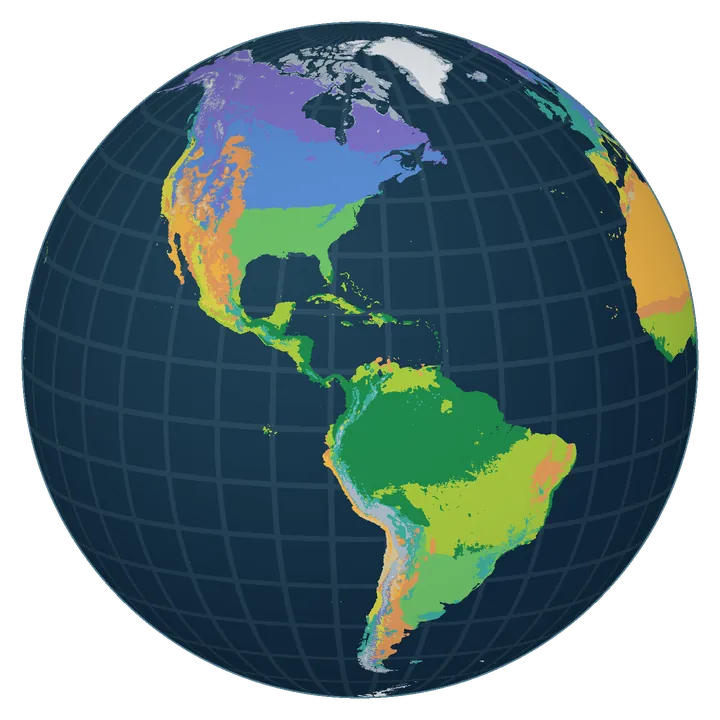
Köppen Cwc
Subpolar highland, dry winter- 7towns
- 2countries
- 10.5 °Ctypical warmest month
- 6.6 °Ctypical coolest month
Cool highland climate with wet summers and dry winters: found on high tropical mountains.
- Only a few months are properly warm
- Rain comes mainly in summer
- Dry, cool winters
Where the subpolar highland, dry winter climate occurs
7 of ClimaClue’s towns have this type, in 2 countries. Across them, the median warmest month averages 10.5 °C (51 °F), the median coolest month 6.6 °C (44 °F), and the median yearly precipitation is 1,026 mm (40.4 in).
Types are calculated from each town’s own modelled 1981–2010 monthly averages, with the Köppen–Geiger rules of Peel et al. (2007).
What typically causes this climate
Textbook mechanisms that typically produce this type; any one place can differ.
- Temperature
- Warm to hot summers; dry, clear winters can bring cool nights.
- Rain and snow
- Monsoon winds bring most of the rain in summer; winters are dry when winds blow from the land.
- Sunshine and cloud
- Dry winters are sunny; summer monsoon months are cloudier.
- Moisture
- Dew points climb when the moist summer monsoon arrives.
- Wind
- Winds shift with the monsoon seasons.
Countries with this climate type
Towns with this climate
- JuliacaPeru · 1,060 mm a year8.9 °C
- PunoPeru · 1,338 mm a year8.6 °C
- ViachaBolivia · 773 mm a year8.4 °C
- San MiguelPeru · 1,026 mm a year9.0 °C
- LlallaguaBolivia · 960 mm a year8.4 °C
- IlavePeru · 1,400 mm a year8.9 °C
- LajaBolivia · 850 mm a year8.6 °C
Sources: CHELSA V2.1 (1981–2010; temperature, precipitation, wind), ERA5-Land (Copernicus, 1981–2010; dew point, snow; contains modified Copernicus Climate Change Service information), relative humidity calculated from that dew point and the CHELSA night lows and day highs, CRU CL 2.0 (New et al. 2002, about 1961–1990; sunshine and the day–night range), NOAA GHCN-Daily (station normals 1981–2010; temperatures and snowfall adjusted toward nearby stations), GeoNames (town names, populations and heights, CC BY 4.0), climate types by the Köppen–Geiger rules of Peel et al. (2007).