 ClimaClue
Melbourne weather by month and climate
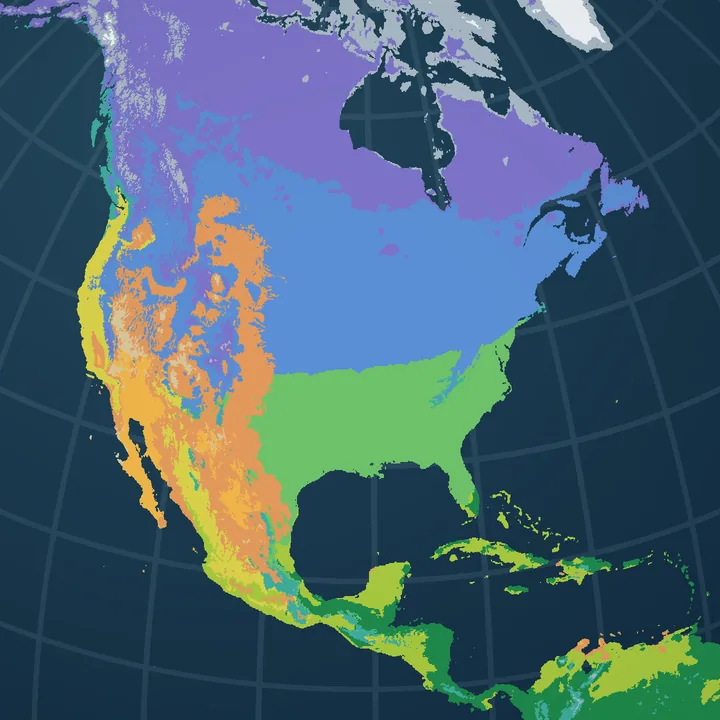
Florida · United States
Average temperature, rain and snow, sunshine and more for every month in Melbourne, from modelled 1981–2010 averages for the town itself (about 3 × 3 km around its centre).
Humid subtropical · CfaOpen Melbourne on the globe ›Melbourne is warmest in August, with 32.0 °C (90 °F) days and 23.3 °C nights, and coolest in January, with 22.0 °C (72 °F) days and 10.4 °C nights. Most rain falls around August (191 mm); January is driest (56 mm).
- Day to day
- ±2.7 °Ca typical day’s swing from its month’s normal; most changeable in January (±4.3 °C)
- Year to year
- ±1.9 °Chow much a month’s average varies between years, most in January; least ±0.5 °C in September
- Sea
- 24.1 °Cnearby sea, yearly average; warmest 28.0 °C in September, coolest 20.1 °C in February · sea by month ›
- Record high
- 37.8 °C100 °F, 2010 · Melbourne Intl Ap station, 3 km away
- Record low
- -3.9 °C25 °F, 2010 · Melbourne Intl Ap station, 3 km away
- Best months
- Jan, Feb, Mar, Apr, May, Nov, Decmild and not too wet · where else is warm in January
- Year average22.7 °C73 °F
- Warmest · August27.6 °C82 °F
- Coolest · January16.2 °C61 °F
- Rain and snow a year1,317 mm51.8 in
- Sunshine a year2,949 habout 1961–1990
Climate type: Humid subtropical (Köppen Cfa) · about this type
Hot, humid summers and mild winters, with rain all year.
Melbourne at a glance
Among the 3129 towns ClimaClue covers in the United States, Melbourne is 238th warmest (22.7 °C year average), 738th sunniest (about 2,949 hours of sunshine a year) and 566th wettest (1,317 mm a year), near the middle on each. Compared with West Melbourne, the nearest covered town with different numbers (5 km away), Melbourne is about as warm in August and 0.3 °C warmer in January, with 31 mm less precipitation a year. Its warmest month, August (27.6 °C), averages 11.4 °C more than its coolest, January (16.2 °C). Even the coolest nights average 10.4 °C (51 °F), in January. The area lies about 20 km from the sea (coastal).
Station check: the nearest NOAA GHCN-Daily station with 1981–2010 averages, 3 km away, agrees with these values: monthly temperatures within 1.8 °C of the station’s, yearly precipitation 105% of the station’s, and a similar seasonal rain pattern. Temperatures on this page are then adjusted toward nearby NOAA stations, so they follow the measurements more closely.
Temperature and precipitation by month in Melbourne
Charts: ClimaClue area averages, CHELSA V2.1, 1981–2010. Hover or tap a point or bar for its value; every number is in the table below.
| Month | Average °C | Day high °C | Night low °C | Precipitation mm |
|---|---|---|---|---|
| January | 16.261 °F | 22.072 °F | 10.451 °F | 562.2 in |
| February | 17.563 °F | 23.073 °F | 11.953 °F | 642.5 in |
| March | 19.667 °F | 25.077 °F | 14.258 °F | 823.2 in |
| April | 21.771 °F | 26.980 °F | 16.462 °F | 612.4 in |
| May | 24.877 °F | 29.485 °F | 20.268 °F | 843.3 in |
| June | 26.980 °F | 31.388 °F | 22.573 °F | 1696.6 in |
| July | 27.682 °F | 32.090 °F | 23.274 °F | 1536.0 in |
| August | 27.682 °F | 32.090 °F | 23.374 °F | 1917.5 in |
| September | 27.081 °F | 30.988 °F | 23.174 °F | 1897.5 in |
| October | 24.576 °F | 28.784 °F | 20.369 °F | 1405.5 in |
| November | 20.869 °F | 25.778 °F | 15.860 °F | 692.7 in |
| December | 17.864 °F | 23.073 °F | 12.555 °F | 582.3 in |
| Year | 22.773 °F | 27.581 °F | 17.864 °F | 1,31751.8 in |
Average: monthly mean air temperature, day and night together. Day high and night low: the month's average daily maximum and minimum (the CHELSA average plus and minus half the day–night range of CRU CL 2.0), not the hottest or coldest days. Precipitation: monthly total of rain and snow as water.
Sunshine, wind and humidity in Melbourne
| Month | Sunshine hours | Wind m/s | Humidity % | Dew point °C | Sea °C |
|---|---|---|---|---|---|
| January | 225 | 4.39.6 mph | 77 | 12.154 °F | 20.769 °F |
| February | 219 | 4.39.6 mph | 76 | 12.855 °F | 20.168 °F |
| March | 274 | 4.49.8 mph | 74 | 14.057 °F | 20.469 °F |
| April | 275 | 4.29.4 mph | 72 | 15.660 °F | 21.971 °F |
| May | 269 | 3.88.5 mph | 73 | 18.966 °F | 24.276 °F |
| June | 263 | 3.27.2 mph | 80 | 22.573 °F | 26.580 °F |
| July | 282 | 2.96.5 mph | 81 | 23.674 °F | 27.481 °F |
| August | 267 | 2.96.5 mph | 81 | 23.875 °F | 27.882 °F |
| September | 233 | 3.68.1 mph | 81 | 22.973 °F | 28.082 °F |
| October | 228 | 4.19.2 mph | 77 | 19.767 °F | 26.480 °F |
| November | 204 | 4.39.6 mph | 78 | 16.462 °F | 23.975 °F |
| December | 211 | 4.29.4 mph | 78 | 13.656 °F | 22.072 °F |
| Year | 2,949 | 3.88.6 mph | 77 | 18.064 °F | 24.175 °F |
Sunshine: estimated hours of bright sunshine (not daylight length or solar energy); the source gives a percentage of possible daylight, converted to hours with astronomical day length; yearly total. Wind: monthly mean speed about 10 m above the ground; gusts and direction are not shown. Humidity: relative humidity, calculated from the month’s average dew point and its average night low and day high (an estimate, not a measurement). Dew point: how much water vapour the air holds. Year row: totals for sunshine and snow, averages otherwise.
Dew point covers part of this area’s land; the coarser ERA5-Land grid treats the rest as sea.
Best time to visit Melbourne
For mild weather, the best months to visit Melbourne are January, February, March, April, May, November and December.
- Mild (average temperature 15–25 °C / 59–77 °F and under 100 mm / 3.9 in of precipitation): January, February, March, April, May, November and December.
- Warmest (average temperature): August (27.6 °C), July (27.6 °C) and September (27.0 °C).
- Driest (least precipitation): January (56 mm), December (58 mm) and April (61 mm).
- Sunniest (hours of sunshine, about 1961–1990): July (282 h), April (275 h) and March (274 h).
Climate only: these rules use 1981–2010 monthly averages and do not consider crowds, prices, events or holidays; any one year can differ.
Melbourne weather month by month
Average conditions for each month (1981–2010 monthly averages; sunshine about 1961–1990), not forecasts.
Melbourne weather in January
Day high 22.0 °C (72 °F) · night low 10.4 °C (51 °F) · average 16.2 °C · precipitation 56 mm (2.2 in) · sunshine about 225 hours · humidity 77% · dew point 12.1 °C.
Compared with December: 1.5 °C cooler, 2 mm less precipitation and 14 hours more sunshine.
Melbourne weather in February
Day high 23.0 °C (73 °F) · night low 11.9 °C (53 °F) · average 17.5 °C · precipitation 64 mm (2.5 in) · sunshine about 219 hours · humidity 76% · dew point 12.8 °C.
Compared with January: 1.3 °C warmer, 9 mm more precipitation and 6 hours less sunshine.
Melbourne weather in March
Day high 25.0 °C (77 °F) · night low 14.2 °C (58 °F) · average 19.6 °C · precipitation 82 mm (3.2 in) · sunshine about 274 hours · humidity 74% · dew point 14.0 °C.
Compared with February: 2.1 °C warmer, 18 mm more precipitation and 54 hours more sunshine.
Melbourne weather in April
Day high 26.9 °C (80 °F) · night low 16.4 °C (62 °F) · average 21.7 °C · precipitation 61 mm (2.4 in) · sunshine about 275 hours · humidity 72% · dew point 15.6 °C.
Compared with March: 2.1 °C warmer, 22 mm less precipitation and 1 hours more sunshine.
Melbourne weather in May
Day high 29.4 °C (85 °F) · night low 20.2 °C (68 °F) · average 24.8 °C · precipitation 84 mm (3.3 in) · sunshine about 269 hours · humidity 73% · dew point 18.9 °C.
Compared with April: 3.1 °C warmer, 23 mm more precipitation and 6 hours less sunshine.
Melbourne weather in June
Day high 31.3 °C (88 °F) · night low 22.5 °C (73 °F) · average 26.9 °C · precipitation 169 mm (6.6 in) · sunshine about 263 hours · humidity 80% · dew point 22.5 °C.
Compared with May: 2.1 °C warmer, 85 mm more precipitation and 6 hours less sunshine.
Melbourne weather in July
Day high 32.0 °C (90 °F) · night low 23.2 °C (74 °F) · average 27.6 °C · precipitation 153 mm (6.0 in) · sunshine about 282 hours · humidity 81% · dew point 23.6 °C.
Compared with June: 0.7 °C warmer, 15 mm less precipitation and 20 hours more sunshine.
Melbourne weather in August
Day high 32.0 °C (90 °F) · night low 23.3 °C (74 °F) · average 27.6 °C · precipitation 191 mm (7.5 in) · sunshine about 267 hours · humidity 81% · dew point 23.8 °C.
Compared with July: 0.1 °C warmer, 38 mm more precipitation and 15 hours less sunshine.
Melbourne weather in September
Day high 30.9 °C (88 °F) · night low 23.1 °C (74 °F) · average 27.0 °C · precipitation 189 mm (7.5 in) · sunshine about 233 hours · humidity 81% · dew point 22.9 °C.
Compared with August: 0.6 °C cooler, 2 mm less precipitation and 34 hours less sunshine.
Melbourne weather in October
Day high 28.7 °C (84 °F) · night low 20.3 °C (69 °F) · average 24.5 °C · precipitation 140 mm (5.5 in) · sunshine about 228 hours · humidity 77% · dew point 19.7 °C.
Compared with September: 2.5 °C cooler, 49 mm less precipitation and 5 hours less sunshine.
Melbourne weather in November
Day high 25.7 °C (78 °F) · night low 15.8 °C (60 °F) · average 20.8 °C · precipitation 69 mm (2.7 in) · sunshine about 204 hours · humidity 78% · dew point 16.4 °C.
Compared with October: 3.7 °C cooler, 72 mm less precipitation and 25 hours less sunshine.
Melbourne weather in December
Day high 23.0 °C (73 °F) · night low 12.5 °C (55 °F) · average 17.8 °C · precipitation 58 mm (2.3 in) · sunshine about 211 hours · humidity 78% · dew point 13.6 °C.
Compared with November: 3.0 °C cooler, 11 mm less precipitation and 8 hours more sunshine.
Why Melbourne has this climate
Typical mechanisms for this climate type, plus facts measured for this place; not a verified local cause.
Mild for its latitude; moving air from the ocean keeps winters from getting very cold and summers from getting very hot. Passing storm systems and showers bring rain in every season, with no reliable dry month. On the coast: the sea warms and cools slowly, which usually softens seasonal swings. Here the coolest and warmest months differ by 11.4 °C.
Rain or snow is spread through much of the year.
Melbourne climate: questions and answers
- What is the warmest month in Melbourne?
- August, with an average of 27.6 °C (82 °F), day highs around 32.0 °C (90 °F) and night lows around 23.3 °C (74 °F).
- What is the coldest month in Melbourne?
- January, with an average of 16.2 °C (61 °F), day highs around 22.0 °C (72 °F) and night lows around 10.4 °C (51 °F).
- Which month gets the most rain in Melbourne?
- August, with 191 mm (7.5 in) of precipitation (rain and snow as water), out of 1,317 mm (51.8 in) in a typical year.
- What is the driest month in Melbourne?
- January, with 56 mm (2.2 in) of precipitation.
- What is the sunniest month in Melbourne?
- July, with about 282 hours of bright sunshine (estimate for about 1961–1990).
- Does it snow in Melbourne?
- Not in a typical year: ERA5-Land gives less than 1 cm of fresh snow a year for this area (1981–2010).
- When is the best time to visit Melbourne?
- For mild weather (average temperature 15–25 °C / 59–77 °F and under 100 mm / 3.9 in of precipitation): January, February, March, April, May, November and December. Climate only, from 1981–2010 averages: crowds and prices are not considered.
- How warm is the sea in Melbourne?
- The nearby open sea averages 28.0 °C (82 °F) in September, its warmest month, and 20.1 °C (68 °F) in February. It is 20 °C (68 °F) or warmer in January, February, March, April, May, June, July, August, September, October, November and December. 1981–2010 averages (ERA5); beaches and shallow bays are often a little warmer in summer.
- What type of climate does Melbourne have?
- Humid subtropical (Köppen Cfa). Hot, humid summers and mild winters, with rain all year. Calculated from the town’s own 1981–2010 monthly averages.
Nearby towns in United States
- West Melbourne5 km (same area) · Cfa · 1,348 mm a year22.6 °C
- Palm Bay6 km · Cfa · 1,340 mm a year22.7 °C
- Merritt Island32 km · Cfa · 1,255 mm a year22.6 °C
- Rockledge32 km · Cfa · 1,283 mm a year22.5 °C
- Sebastian33 km · Cfa · 1,381 mm a year22.8 °C
- Cocoa36 km · Cfa · 1,299 mm a year22.5 °C
Climate twins elsewhere
Towns in other countries whose monthly temperature and rain pattern is closest to Melbourne’s (the measure used by ClimaClue’s Climate Twins game; seasons are lined up across hemispheres).
- Asunción, ParaguayCfa · months typically 1.1 °C apart · seasons reversed
- Formosa, ArgentinaCfa · months typically 1.1 °C apart · seasons reversed
- Zhubei, TaiwanCfa · months typically 0.7 °C apart
- Pingxiang, Guangxi, ChinaCwa · months typically 1.4 °C apart
- Lạng Sơn, VietnamCwa · months typically 1.5 °C apart
About these numbers
Temperature, precipitation and wind: modelled monthly averages (climate normals) for Melbourne itself, the average of the ~1 km source cells in the 3 × 3 km around its GeoNames location (28.084°N, 80.608°W). Day highs and night lows add the day–night range of the surrounding CRU cell (about 18 km), or on a few small islands the nearest weather station’s; where there is neither, they are not shown. Sunshine, dew point and snow come from coarser sources and describe the 0.1° area around it, about 9.8 × 11 km (ClimaClue area sq-559-993), which is also what the globe shows when you click there; humidity is calculated from that dew point and the town’s own night lows and day highs. They are model estimates, not measurements at a weather station, and not forecasts. Sources: CHELSA V2.1, 1981–2010 (temperature, precipitation, wind); ERA5-Land, 1981–2010 (dew point and snow; snowfall matched to the area’s CHELSA climate; contains modified Copernicus Climate Change Service information); relative humidity calculated from the dew point and the night lows and day highs; CRU CL 2.0, about 1961–1990 (sunshine and the day–night range; a different period); GeoNames (name and population 84,678, CC BY 4.0); climate type by the Köppen–Geiger rules of Peel et al. (2007). How ClimaClue makes these numbers.