 ClimaClue
Mediterranean, hot summer climate (Köppen Csa)
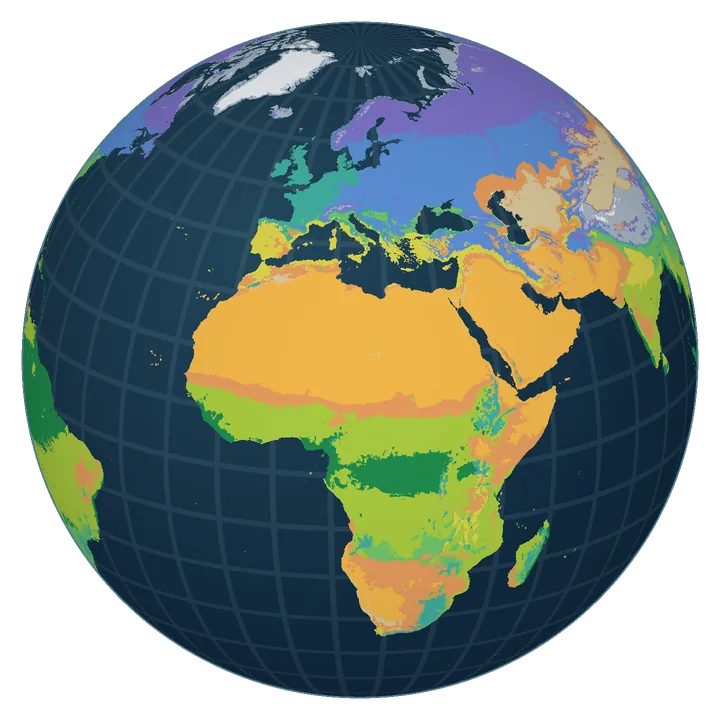
Köppen Csa
Mediterranean, hot summer- 2,727towns
- 46countries
- 26.1 °Ctypical warmest month
- 10.3 °Ctypical coolest month
Hot, dry summers and mild, wetter winters.
- Summer is the dry season
- Most rain falls in the cooler half of the year
- Long, sunny, hot summers
Where the mediterranean, hot summer climate occurs
2,727 of ClimaClue’s towns have this type, in 46 countries. Across them, the median warmest month averages 26.1 °C (79 °F), the median coolest month 10.3 °C (51 °F), and the median yearly precipitation is 682 mm (26.9 in).
Types are calculated from each town’s own modelled 1981–2010 monthly averages, with the Köppen–Geiger rules of Peel et al. (2007).
What typically causes this climate
Textbook mechanisms that typically produce this type; any one place can differ.
- Temperature
- Summers are warm under persistent high pressure; nearby sea often softens winter cold.
- Rain and snow
- In summer the subtropical high pressure moves over and blocks storms, so summers are dry; in winter it retreats and storms from the ocean bring rain.
- Sunshine and cloud
- Summer high pressure brings long sunny spells; winter is cloudier.
- Moisture
- Summers are often dry inland but can be humid with low cloud near cool coasts.
- Wind
- Winter storms bring the stronger winds; summer sea breezes are common near coasts.
Themes: Cities with dry summers · climate rankings
Countries with this climate type
- India538 towns with this climate
- Italy306 towns with this climate
- Spain301 towns with this climate
- Turkey261 towns with this climate
- United States178 towns with this climate
- Algeria156 towns with this climate
- Israel97 towns with this climate
- Morocco91 towns with this climate
- Greece88 towns with this climate
- Iran85 towns with this climate
- France82 towns with this climate
- Portugal73 towns with this climate
- Syria57 towns with this climate
- Tunisia57 towns with this climate
- Mexico45 towns with this climate
- Iraq37 towns with this climate
- Palestinian Territory34 towns with this climate
- Uzbekistan29 towns with this climate
- Chile26 towns with this climate
- China18 towns with this climate
- Jordan18 towns with this climate
- Pakistan16 towns with this climate
- Lebanon15 towns with this climate
- Albania14 towns with this climate
- Tanzania12 towns with this climate
- Tajikistan11 towns with this climate
- Australia10 towns with this climate
- Cyprus9 towns with this climate
- Afghanistan8 towns with this climate
- Malta7 towns with this climate
- Malawi6 towns with this climate
- Zambia6 towns with this climate
- South Africa5 towns with this climate
- Azerbaijan4 towns with this climate
- Croatia4 towns with this climate
- Libya4 towns with this climate
- Nepal4 towns with this climate
- Kazakhstan3 towns with this climate
- Ethiopia2 towns with this climate
- Montenegro2 towns with this climate
- Myanmar2 towns with this climate
- North Macedonia2 towns with this climate
- Gibraltar1 town with this climate
- Kyrgyzstan1 town with this climate
- Monaco1 town with this climate
- Vatican1 town with this climate
The 120 largest towns with this climate
- IstanbulTurkey · 783 mm a year14.8 °C
- TehranIran · 397 mm a year16.1 °C
- SantiagoChile · 618 mm a year15.7 °C
- Los AngelesUnited States · 431 mm a year18.6 °C
- AnkaraTurkey · 420 mm a year12.9 °C
- BursaTurkey · 1,076 mm a year15.1 °C
- İzmirTurkey · 664 mm a year17.7 °C
- KanpurIndia · 882 mm a year25.3 °C
- LucknowIndia · 900 mm a year25.1 °C
- PerthAustralia · 780 mm a year18.8 °C
- AlgiersAlgeria · 682 mm a year17.9 °C
- RomeItaly · 770 mm a year15.9 °C
- GaziantepTurkey · 689 mm a year15.3 °C
- AleppoSyria · 366 mm a year18.1 °C
- TashkentUzbekistan · 450 mm a year14.9 °C
- BeirutLebanon · 992 mm a year20.0 °C
- DiyarbakırTurkey · 558 mm a year16.2 °C
- AdanaTurkey · 687 mm a year18.9 °C
- BhopalIndia · 1,214 mm a year25.4 °C
- BarcelonaSpain · 634 mm a year15.9 °C
- PatnaIndia · 1,023 mm a year25.7 °C
- MosulIraq · 435 mm a year21.0 °C
- RabatMorocco · 485 mm a year18.5 °C
- ErbilIraq · 625 mm a year20.2 °C
- ZapopanMexico · 901 mm a year20.5 °C
- AdelaideAustralia · 705 mm a year16.4 °C
- GuadalajaraMexico · 864 mm a year20.6 °C
- AntalyaTurkey · 1,032 mm a year19.4 °C
- ShirazIran · 423 mm a year17.7 °C
- DhanbadIndia · 1,564 mm a year24.9 °C
- FesMorocco · 546 mm a year18.6 °C
- VaranasiIndia · 1,052 mm a year25.8 °C
- RanchiIndia · 1,413 mm a year23.2 °C
- LilongweMalawi · 799 mm a year20.9 °C
- JabalpurIndia · 1,370 mm a year25.3 °C
- PrayagrajIndia · 916 mm a year25.7 °C
- GwaliorIndia · 833 mm a year25.7 °C
- TangierMorocco · 655 mm a year18.1 °C
- KirkukIraq · 498 mm a year21.8 °C
- EsenyurtTurkey · 803 mm a year14.5 °C
- SaléMorocco · 499 mm a year18.6 °C
- JerusalemIsrael · 642 mm a year17.4 °C
- NaplesItaly · 936 mm a year16.8 °C
- SulaymaniyahIraq · 897 mm a year17.5 °C
- MarseilleFrance · 577 mm a year15.7 °C
- ValenciaSpain · 522 mm a year18.2 °C
- ÇankayaTurkey · 422 mm a year12.9 °C
- KüçükçekmeceTurkey · 704 mm a year14.9 °C
- PanzhihuaChina · 767 mm a year21.6 °C
- HomsSyria · 415 mm a year17.5 °C
- MalatyaTurkey · 448 mm a year14.2 °C
- BareillyIndia · 1,089 mm a year24.6 °C
- BağcılarTurkey · 782 mm a year14.6 °C
- MorādābādIndia · 1,153 mm a year24.4 °C
- LatakiaSyria · 943 mm a year19.3 °C
- TunisTunisia · 505 mm a year18.8 °C
- SevillaSpain · 551 mm a year19.1 °C
- DushanbeTajikistan · 746 mm a year15.6 °C
- GorakhpurIndia · 1,266 mm a year25.2 °C
- AthensGreece · 391 mm a year18.3 °C
- TlaquepaqueMexico · 880 mm a year20.5 °C
- PalermoItaly · 700 mm a year18.5 °C
- KermanshahIran · 526 mm a year14.9 °C
- SamarkandUzbekistan · 379 mm a year14.2 °C
- MálagaSpain · 528 mm a year18.4 °C
- GenoaItaly · 1,194 mm a year15.2 °C
- BahçelievlerTurkey · 764 mm a year14.7 °C
- ÜmraniyeTurkey · 820 mm a year14.3 °C
- IrbidJordan · 416 mm a year17.5 °C
- MeknesMorocco · 493 mm a year17.5 °C
- BokāroIndia · 1,541 mm a year25.2 °C
- ChuxiongChina · 779 mm a year17.6 °C
- MersinTurkey · 597 mm a year19.1 °C
- NilüferTurkey · 872 mm a year15.6 °C
- SacramentoUnited States · 529 mm a year16.6 °C
- ÜsküdarTurkey · 759 mm a year14.8 °C
- EsenlerTurkey · 818 mm a year14.6 °C
- LisbonPortugal · 736 mm a year17.1 °C
- MaipúChile · 423 mm a year15.7 °C
- SancaktepeTurkey · 863 mm a year14.4 °C
- KarabağlarTurkey · 701 mm a year17.7 °C
- GayaIndia · 1,086 mm a year25.7 °C
- KenitraMorocco · 548 mm a year18.3 °C
- ḨamāhSyria · 444 mm a year18.7 °C
- ŢarţūsSyria · 1,261 mm a year19.8 °C
- BornovaTurkey · 797 mm a year17.0 °C
- BatmanTurkey · 566 mm a year16.5 °C
- MuratpaşaTurkey · 1,091 mm a year19.5 °C
- ŞanlıurfaTurkey · 476 mm a year18.2 °C
- ConstantineAlgeria · 537 mm a year16.6 °C
- PalmaSpain · 512 mm a year18.2 °C
- SultangaziTurkey · 880 mm a year14.3 °C
- Tel AvivIsrael · 642 mm a year20.1 °C
- MaltepeTurkey · 790 mm a year14.3 °C
- TétouanMorocco · 686 mm a year17.6 °C
- BeylikdüzüTurkey · 709 mm a year14.5 °C
- JhānsiIndia · 936 mm a year25.7 °C
- GazaPalestinian Territory · 417 mm a year20.6 °C
- Tonalá, JaliscoMexico · 927 mm a year20.1 °C
- BhāgalpurIndia · 1,301 mm a year25.4 °C
- AntakyaTurkey · 920 mm a year18.6 °C
- SamsunTurkey · 834 mm a year14.2 °C
- GauriganjIndia · 974 mm a year25.3 °C
- KahramanmaraşTurkey · 871 mm a year15.9 °C
- UşakTurkey · 663 mm a year13.2 °C
- FlorenceItaly · 1,003 mm a year14.5 °C
- AlanyaTurkey · 1,385 mm a year19.7 °C
- AtaşehirTurkey · 780 mm a year14.5 °C
- SultanbeyliTurkey · 913 mm a year14.2 °C
- FatihTurkey · 803 mm a year14.7 °C
- TarsusTurkey · 599 mm a year18.7 °C
- AnnabaAlgeria · 693 mm a year19.2 °C
- NiceFrance · 826 mm a year15.8 °C
- TemaraMorocco · 470 mm a year18.4 °C
- DihokIraq · 746 mm a year18.0 °C
- KarşıyakaTurkey · 656 mm a year18.0 °C
- CuernavacaMexico · 1,093 mm a year20.2 °C
- TepicMexico · 1,395 mm a year21.1 °C
- KonakTurkey · 653 mm a year17.9 °C
- BlidaAlgeria · 678 mm a year17.6 °C
Sources: CHELSA V2.1 (1981–2010; temperature, precipitation, wind), ERA5-Land (Copernicus, 1981–2010; dew point, snow; contains modified Copernicus Climate Change Service information), relative humidity calculated from that dew point and the CHELSA night lows and day highs, CRU CL 2.0 (New et al. 2002, about 1961–1990; sunshine and the day–night range), NOAA GHCN-Daily (station normals 1981–2010; temperatures and snowfall adjusted toward nearby stations), GeoNames (town names, populations and heights, CC BY 4.0), climate types by the Köppen–Geiger rules of Peel et al. (2007).