 ClimaClue
Nepal climate: towns and climate types
Largest towns
- 1KathmanduHumid subtropical, dry winter18.7 °C
- 2PokharaHumid subtropical, dry winter18.9 °C
- 3BharatpurHumid subtropical, dry winter24.2 °C
- 4PātanHumid subtropical, dry winter18.6 °C
Main climate types
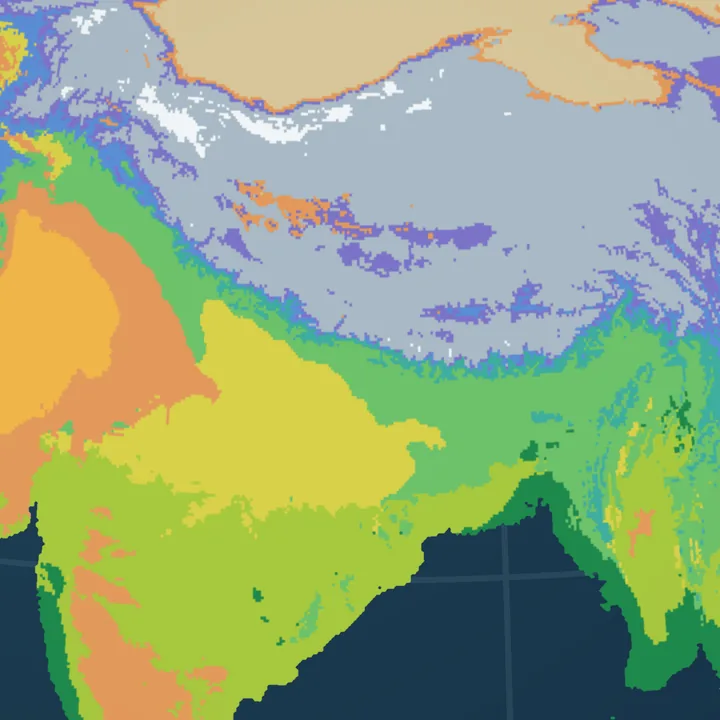
Humid subtropical, dry winter · 39Mediterranean, hot summer · 4Subtropical highland, dry winter · 3Monthly climate averages for 46 towns in Nepal, including Kathmandu, Pokhara and Bharatpur. Each page has month-by-month temperature, rain and snow, sunshine and more, from modelled 1981–2010 averages for each town’s own location.
Rankings for Nepal › warmest, coldest, sunniest, wettest and driest towns, by year and by month.
Climate types in Nepal
- Humid subtropical, dry winter · Cwa39 towns
- Mediterranean, hot summer · Csa4 towns
- Subtropical highland, dry winter · Cwb3 towns
Towns in Nepal
Köppen type · year-average temperature · yearly rain and snow (as water), 1981–2010. Grouped by region; largest towns first.
Bagmati Province
- KathmanduCwa · 1,634 mm a year18.7 °C
- BharatpurCwa · 2,267 mm a year24.2 °C
- PātanCwa · 1,617 mm a year18.6 °C
- HetaudaCwa · 2,349 mm a year23.1 °C
- Madhyapur ThimiCwa · 1,580 mm a year18.5 °C
Smaller towns: Banepā · Chautārā · Panauti · Ki̇̄rtipur · Chari̇̄koṭ · Panauti̇̄ · Dhulikhel
Gandaki Pradesh
Karnali Pradesh
Smaller towns: Dailekh
Koshi
Smaller towns: Triyuga · Inaruwa · Īṭahari̇̄ · Khā̃dbāri̇̄ · Dhankutā · Bhadrapur · Ilām
Lumbini Province
Smaller towns: Siddharthanagar · Gulariyā · Tulsi̇̄pur · Tānsen
Madhesh
- BirgañjCwa · 1,734 mm a year25.0 °C
- JanakpurCwa · 1,459 mm a year25.3 °C
- LahānCwa · 1,479 mm a year25.1 °C
Smaller towns: Rājbirāj · Gaur · Siraha · Jaleshwar · Malaṅgawā
Sudurpashchim Pradesh
Smaller towns: Bhimdatta · Ṭikāpur · Dipayal · Amargaḍhi̇̄ · Dārchulā
Sources: CHELSA V2.1 (1981–2010; temperature, precipitation, wind), ERA5-Land (Copernicus, 1981–2010; dew point, snow; contains modified Copernicus Climate Change Service information), relative humidity calculated from that dew point and the CHELSA night lows and day highs, CRU CL 2.0 (New et al. 2002, about 1961–1990; sunshine and the day–night range), NOAA GHCN-Daily (station normals 1981–2010; temperatures and snowfall adjusted toward nearby stations), GeoNames (town names, populations and heights, CC BY 4.0), climate types by the Köppen–Geiger rules of Peel et al. (2007).