 ClimaClue
Finland climate: towns and climate types
Largest towns
- 1HelsinkiHumid continental, warm summer5.6 °C
- 2EspooHumid continental, warm summer5.5 °C
- 3TampereHumid continental, warm summer4.6 °C
- 4VantaaHumid continental, warm summer5.4 °C
Main climate types
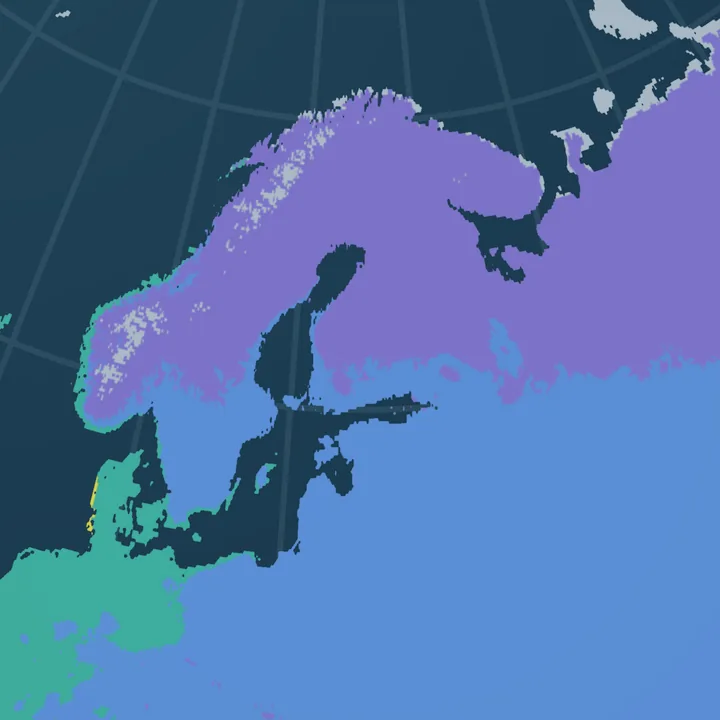
Humid continental, warm summer · 47Subarctic · 31Monthly climate averages for 78 towns in Finland, including Helsinki, Espoo and Tampere. Each page has month-by-month temperature, rain and snow, sunshine and more, from modelled 1981–2010 averages for each town’s own location.
Climate types in Finland
Towns in Finland
Köppen type · year-average temperature · yearly rain and snow (as water), 1981–2010. Grouped by region; largest towns first.
Central Finland
Smaller towns: Jämsä · Laukaa · Äänekoski
Central Ostrobothnia
Towns: Kokkola
Kainuu
Towns: Kajaani
Kanta-Häme
Towns: Hämeenlinna · Riihimäki · Forssa · Janakkala
Kymenlaakso
Towns: Kouvola · Kotka · Karhula · Hamina
Lapland
Towns: Rovaniemi · Tornio · Kemi
North Karelia
Towns: Joensuu · Kontiolahti
North Ostrobothnia
Smaller towns: Raahe · Haukipudas · Ylivieska
North Savo
Smaller towns: Siilinjärvi · Iisalmi · Varkaus
Ostrobothnia
Towns: Vaasa · Jakobstad · Korsholm
Paijat-Hame
Smaller towns: Hollola · Heinola · Orimattila
Pirkanmaa
Smaller towns: Nokia · Kangasala · Ylöjärvi · Lempäälä · Sastamala · Pirkkala · Valkeakoski · Vammala
Satakunta
South Karelia
Towns: Lappeenranta · Imatra
South Ostrobothnia
Towns: Seinäjoki · Kurikka · Kauhava
South Savo
Towns: Mikkeli · Savonlinna · Pieksämäki
Southwest Finland
Smaller towns: Salo · Kaarina · Raisio · Lieto · Naantali · Väståboland · Loimaa
Uusimaa
Smaller towns: Porvoo · Järvenpää · Lohja · Nurmijärvi · Hyvinge · Tuusula · Kirkkonummi · Kerava · Vihti · Raseborg · Sibbo · Klaukkala · Mäntsälä · Myyrmäki
Sources: CHELSA V2.1 (1981–2010; temperature, precipitation, wind), ERA5-Land (Copernicus, 1981–2010; dew point, snow; contains modified Copernicus Climate Change Service information), relative humidity calculated from that dew point and the CHELSA night lows and day highs, CRU CL 2.0 (New et al. 2002, about 1961–1990; sunshine and the day–night range), NOAA GHCN-Daily (station normals 1981–2010; temperatures and snowfall adjusted toward nearby stations), GeoNames (town names, populations and heights, CC BY 4.0), climate types by the Köppen–Geiger rules of Peel et al. (2007).