 ClimaClue
Gothenburg weather in February
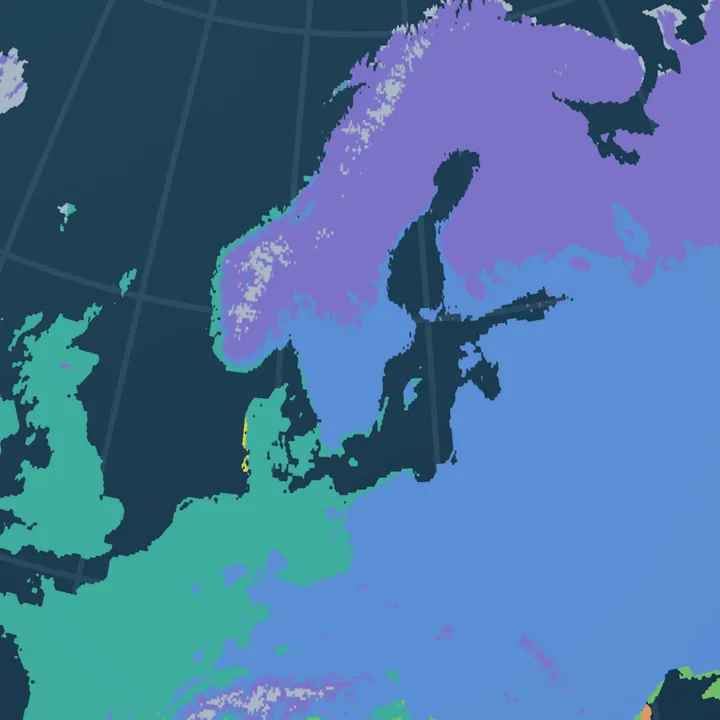
February · Västra Götaland · Sweden
Average February weather in Gothenburg: modelled 1981–2010 averages for the city itself (about 3 × 3 km around its centre) (climate normals, not a forecast).
Humid continental, warm summer · DfbOpen Gothenburg on the globe ›In February, Gothenburg averages 1.9 °C (35 °F) days and -2.8 °C (27 °F) nights, with 58 mm (2.3 in) of rain and snow over the month and about 47 hours of sunshine.
- Day to day
- ±4.1 °Chow far a typical February day strays from that average; about one day in twenty is twice as far
- Year to year
- ±3.2 °Cin two years out of three, February averages between -3.7 °C and 2.8 °C
- Sea
- 2.5 °C37 °F; cold for most swimmers · sea by month ›
- Good time to visit?
- Less somild months: Jul, Aug
Plan by month: where else is warm in February · warmest cities in the world in February · sunniest in February
- Day high1.9 °C35 °F
- Night low-2.8 °C27 °F
- Average-0.5 °C31 °F
- Precipitation58 mm2.3 in
- Sunshine47 habout 1961–1990
- Humidity85%relative
- Dew point-2.9 °C27 °F
- Fresh snow20 cm7.8 in
- Snow on ground3.1 cmaverage depth
Station check: the nearest NOAA GHCN-Daily station with 1981–2010 averages, 2 km away, agrees with these values: monthly temperatures within 1.3 °C of the station’s, yearly precipitation 104% of the station’s, and a similar seasonal rain pattern. Temperatures on this page are then adjusted toward nearby NOAA stations, so they follow the measurements more closely.
How February compares in Gothenburg
Charts: ClimaClue area averages, CHELSA V2.1, 1981–2010. Hover or tap a point or bar for its value; every number is in the table below.
February is the coolest month, the 2nd driest of the 12 and the 4th least sunny of the 12 in Gothenburg. Compared with January: 0.1 °C cooler, 26 mm less precipitation and 23 hours more sunshine. March is 2.6 °C warmer than February on average.
Gothenburg among towns in Sweden in February
Of the 99 towns ClimaClue covers in Sweden, Gothenburg ranks 24th warmest (average temperature), 23rd sunniest and 12th wettest in February.
Warmest: Trelleborg (1.1 °C) · coolest: Kiruna (-12.4 °C) · sunniest: Limhamn (53 h) · wettest: Borås (71 mm) · driest: Enköping (29 mm).
What to pack for Gothenburg in February
Going by the averages: a warm coat, a hat and gloves, a compact umbrella and waterproof boots.
Rules used: day high under 10 °C (50 °F) → warm coat; 10–18 °C → jacket or sweater; 18–25 °C → light layers; 25 °C (77 °F) or more → light, breathable clothes; night low under 0 °C → hat and gloves; night low 10 °C or more below the day high → an extra layer for evenings; 100 mm or more of precipitation → rain jacket or umbrella; 50–100 mm → compact umbrella; 5 cm or more of fresh snow, or snow on the ground → waterproof boots; dew point 16 °C (61 °F) or more → breathable fabrics for humid air; 250 hours of sunshine or more → sunglasses. Averages only: check a forecast before you travel.
February in other big cities
| City | Day high | Night low | Precipitation | Sunshine |
|---|---|---|---|---|
| CopenhagenDenmark · 229 km away | 3.739 °F | -0.831 °F | 35 | 57 |
| OsloNorway · 255 km away | 0.934 °F | -5.023 °F | 49 | 64 |
| StockholmSweden · 397 km away | 0.433 °F | -4.724 °F | 30 | 40 |
| MunichGermany · climate twin | 4.240 °F | -4.025 °F | 49 | 78 |
| RigaLatvia · climate twin | -0.631 °F | -6.021 °F | 37 | 62 |
| AmsterdamThe Netherlands · climate twin | 6.243 °F | 0.433 °F | 60 | 71 |
Gothenburg in February: questions and answers
- What is the weather like in Gothenburg in February?
- In February, Gothenburg averages a day high of 1.9 °C (35 °F) and a night low of -2.8 °C (27 °F), with 58 mm (2.3 in) of precipitation and about 47 hours of sunshine. These are 1981–2010 averages for the ~10 km area, not a forecast.
- Is February a good time to visit Gothenburg?
- February is not one of Gothenburg’s mild months; those are July and August, counting a month as mild with an average temperature 15–25 °C / 59–77 °F and under 100 mm / 3.9 in of precipitation. Climate only: crowds and prices are not considered.
- How much does it rain in Gothenburg in February?
- 58 mm (2.3 in) of precipitation (rain and snow as water) on average, making February the 2nd driest of the 12. The wettest month is October (105 mm), the driest April (51 mm).
- Does it snow in Gothenburg in February?
- Yes, on average: about 20 cm (7.8 in) of fresh snow in February (ERA5-Land snowfall at 1 mm of water ≈ 1 cm of snow, adjusted to nearby weather stations), and snow lies on the ground with an average depth of 3.1 cm.
- How many hours of sunshine does Gothenburg get in February?
- About 47 hours of bright sunshine, the 4th least sunny of the 12 (estimate for about 1961–1990).
- How warm is the sea in Gothenburg in February?
- About 2.5 °C (37 °F) on average in the nearby open sea, cold for most swimmers; its warmest month is August (17.8 °C). 1981–2010 averages (ERA5).
- What should I pack for Gothenburg in February?
- Going by the averages: a warm coat, a hat and gloves, a compact umbrella and waterproof boots. Check a forecast before you travel; these are long-term averages.
Jan Feb Mar Apr May Jun Jul Aug Sep Oct Nov Dec
Day high and night low are the month’s average daily maximum and minimum, not extremes. Sources: CHELSA V2.1, 1981–2010 (temperature, precipitation); ERA5-Land, 1981–2010 (dew point and snow; snowfall matched to the area’s CHELSA climate; contains modified Copernicus Climate Change Service information); humidity calculated from the dew point and temperature; CRU CL 2.0, about 1961–1990 (sunshine and the day–night range). More on the Gothenburg climate page, Sweden and how the data is made.