 ClimaClue
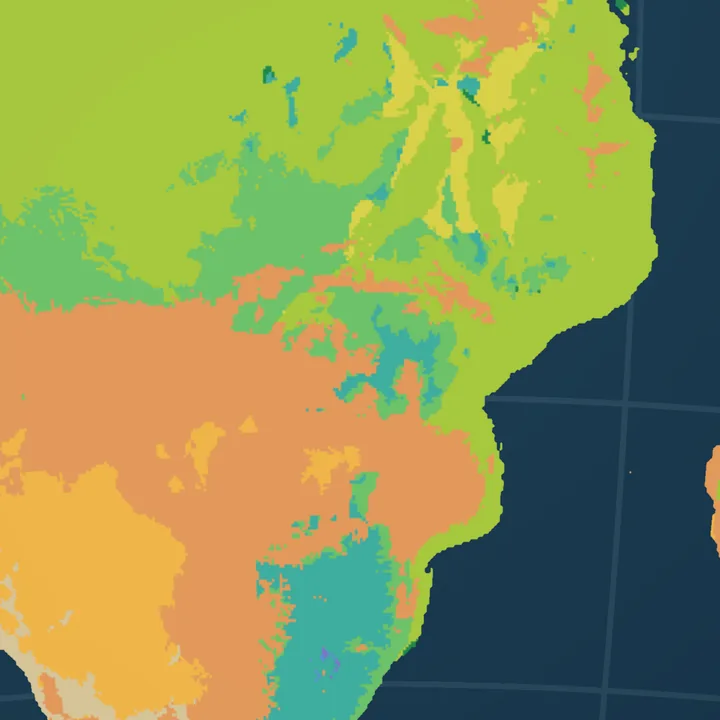
Zimbabwe climate: towns and climate types
Largest towns
- 1HarareSubtropical highland, dry winter18.4 °C
- 2BulawayoHot semi-arid19.3 °C
- 3ChitungwizaSubtropical highland, dry winter18.7 °C
- 4MutareSubtropical highland, dry winter18.6 °C
Main climate types
Subtropical highland, dry winter · 11Hot semi-arid · 9Humid subtropical, dry winter · 7Tropical savanna · 1Monthly climate averages for 29 towns in Zimbabwe, including Harare, Bulawayo and Chitungwiza. Each page has month-by-month temperature, rain and snow, sunshine and more, from modelled 1981–2010 averages for each town’s own location.
Climate types in Zimbabwe
- Subtropical highland, dry winter · Cwb11 towns
- Hot semi-arid · BSh9 towns
- Humid subtropical, dry winter · Cwa7 towns
- Tropical savanna · Aw1 town
- Hot desert · BWh1 town
Towns in Zimbabwe
Köppen type · year-average temperature · yearly rain and snow (as water), 1981–2010. Largest towns first.
- HarareCwb · 800 mm a year18.4 °C
- BulawayoBSh · 604 mm a year19.3 °C
- ChitungwizaCwb · 766 mm a year18.7 °C
- MutareCwb · 993 mm a year18.6 °C
- GweruCwb · 743 mm a year18.5 °C
- KwekweBSh · 657 mm a year20.7 °C
- KadomaCwa · 737 mm a year21.2 °C
Smaller towns: Ruwa · Chinhoyi · Masvingo · Norton · Marondera · Chegutu · Zvishavane · Beitbridge · Bindura · Redcliff · Chiredzi · Hwange · Rusape · Karoi · Victoria Falls · Chipinge · Gokwe · Kariba · Gwanda · Shurugwi · Mvurwi · Harare Western Suburbs
Sources: CHELSA V2.1 (1981–2010; temperature, precipitation, wind), ERA5-Land (Copernicus, 1981–2010; dew point, snow; contains modified Copernicus Climate Change Service information), relative humidity calculated from that dew point and the CHELSA night lows and day highs, CRU CL 2.0 (New et al. 2002, about 1961–1990; sunshine and the day–night range), NOAA GHCN-Daily (station normals 1981–2010; temperatures and snowfall adjusted toward nearby stations), GeoNames (town names, populations and heights, CC BY 4.0), climate types by the Köppen–Geiger rules of Peel et al. (2007).